Loading...
Serving Rialto, CA and surrounding areas. (909) 546-5159
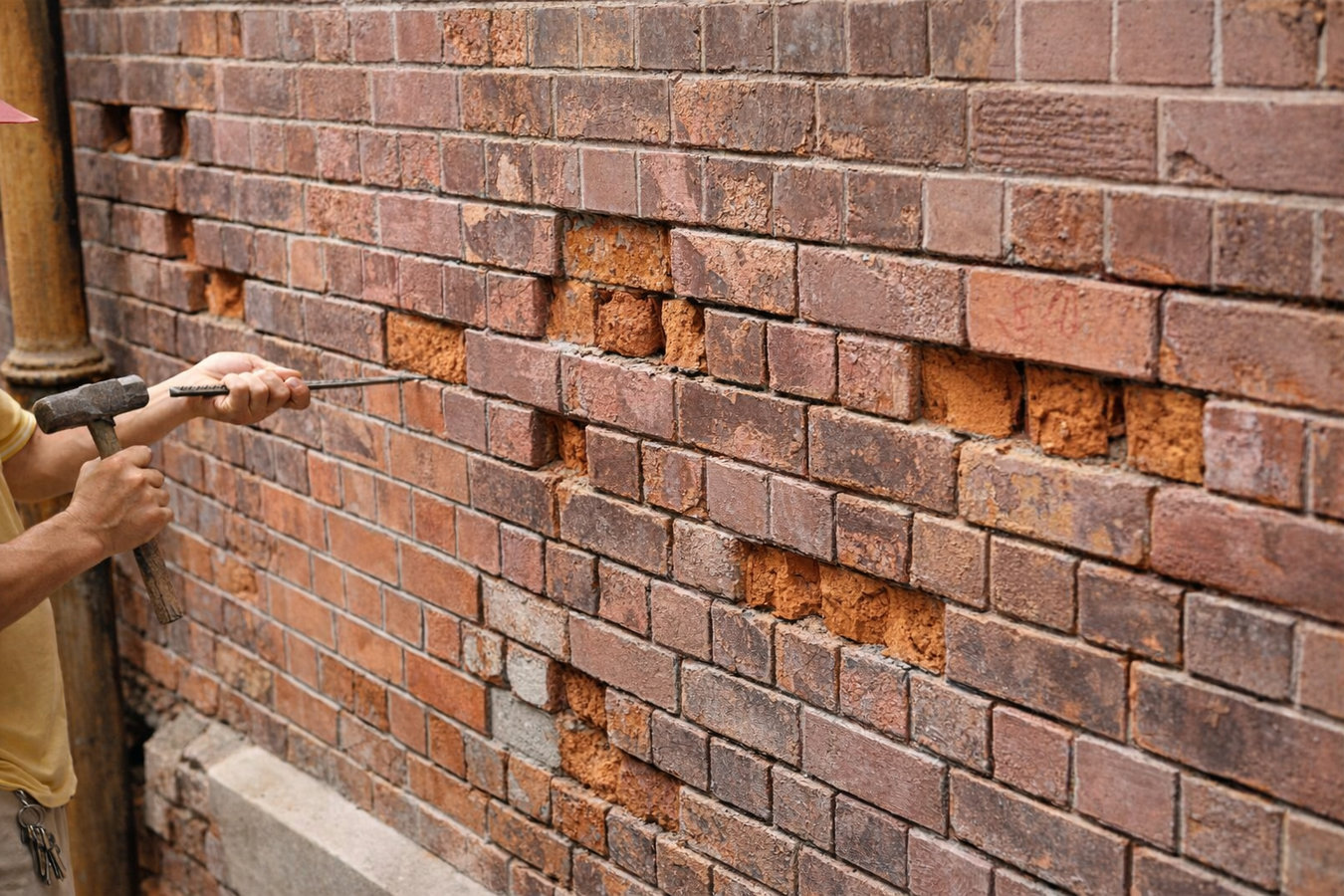
Cracked bricks, crumbling joints, and diagonal wall cracks all get worse with time. We find the cause, fix it properly, and match the mortar to your existing wall so the repair blends in.
Brick repair in Rialto covers fixing individual damaged bricks, refilling crumbling mortar, and patching small sections of a wall or chimney. Most jobs on a single-family home take one to three days, and a skilled mason can often make repairs that blend in so well you cannot see where the old work ends and the new work begins.
The most common culprit in Rialto is the mortar itself. Mortar is softer than brick by design - it absorbs movement and moisture so the bricks do not crack. Over time, especially in Rialto's intense heat and low humidity, mortar crumbles and pulls away from the brick face. Once that happens, water gets behind the wall and the damage spreads quickly. Rialto's clay soil adds another layer: it expands when wet and shrinks when dry, which puts constant stress on walls from below.
If the mortar joints are the main issue but the bricks themselves are still in good shape, you may need tuckpointing rather than full brick replacement. We assess both during every estimate so you are not paying for more than the wall actually needs.
Run your finger along the joints between bricks. If the mortar feels soft, crumbles easily, or has gaps where it has pulled back from the brick face, it is no longer sealing the wall. In Rialto's heat, this kind of breakdown is common on walls that have not been inspected in 15 or more years.
A crack running at an angle - especially one wider at one end than the other - usually means the wall has shifted. Rialto's expansive clay soils make this kind of movement common, and filling the crack without addressing the underlying shift means it will be back within a season. These cracks tend to grow.
Efflorescence - the chalky white streaks on brick surfaces - is mineral salt left behind as moisture moves through the wall. It signals water is getting in somewhere. In Rialto, this often appears after the winter rainy season or near irrigation systems that splash the wall regularly.
Chimney brick takes more abuse than almost any other surface - heat from inside, sun and UV from outside, and occasional rain. If you can see chips, flaking faces, or missing chunks from the ground, the damage is likely worse up close. Chimneys on Rialto homes from the 1960s and 1970s are especially prone to this kind of wear.
Our brick repair work covers mortar repointing, individual brick replacement, crack repair, spall repair, and chimney brick restoration. Every job starts with removing the old damaged material thoroughly - rushing this step is the most common reason repairs fail early. We then pack in fresh mortar by hand and finish it to match the original joint profile and color as closely as possible.
For walls where mortar joints are failing across larger sections, our tuckpointing service handles systematic joint removal and repointing on a broader scale. When outdoor hardscape surfaces like a brick patio or planter surround are also damaged, we can often combine that work with our driveway pavers and flatwork services in a single visit. We will let you know what can be bundled efficiently after seeing the full scope of work.
Best for walls where mortar is crumbling and pulling back but the bricks themselves are structurally sound.
For walls with cracked, spalled, or missing bricks that need individual units swapped out and matched to the surrounding masonry.
Designed for chimney stacks where heat cycling, UV exposure, and weather have degraded bricks and joints beyond a simple repoint.
Rialto's Inland Empire climate accelerates mortar breakdown in two specific ways. First, summer temperatures regularly exceed 100 degrees Fahrenheit, which dries out mortar joints faster than in cooler regions and causes them to shrink and crack. Second, much of Rialto sits on clay-heavy soil that expands when wet and shrinks when dry - a cycle that puts constant stress on brick walls and retaining structures from below. If you see diagonal cracks or cracks that are wider at one end, soil movement is almost certainly involved. According to the Brick Industry Association, mortar that is too hard relative to the original brick can cause the brick face itself to spall - a common outcome when contractors skip the step of matching the mortar to the building's age and material.
A large share of Rialto's housing was built between the 1950s and 1980s, which means many homes have original mortar that is now four to seven decades old. That mortar was typically softer and more lime-based than modern mixes, and matching the replacement correctly is what separates a repair that lasts from one that fails again within two years. Homeowners in Bloomington and Colton deal with the same soil and climate conditions, and we regularly work across the region on exactly this type of repair.
We ask a few basic questions - where the damage is, roughly how much area is affected, and whether it is on a chimney, fence, or wall. We respond within one business day and schedule a free on-site walkthrough because brick repair is one of those jobs where a photo cannot tell the whole story.
We walk the damaged area with you, explain what we are seeing in plain terms, and point out what is causing the problem - not just what it looks like on the surface. You get a written estimate before any work is agreed to, and this is the time to ask how we plan to match the existing mortar color and texture.
We start by removing all old, damaged mortar and cleaning the joints thoroughly before any new material goes in. This prep step takes longer than the filling, and that is correct - rushing it is the most common shortcut that leads to early failure. New mortar is then packed in by hand and finished to match.
We clean the work area and walk through the finished repair together before leaving. New mortar needs 24 to 48 hours before it should get wet - keep sprinklers away from the repaired area and avoid pressure washing for at least a week. We tell you all of this before we leave.
Free written estimate. We explain exactly what we find before touching anything. One business day response.
(909) 546-5159Rialto's clay soil means cracks that are just patched over come back fast. We look at what is driving the damage before recommending a repair - whether that is a drainage issue near the wall, soil movement, or just decades of heat cycles. Fixing the surface without addressing the cause is money wasted.
Mismatched mortar is one of the most common complaints homeowners have after brick repair, and it is completely avoidable. We take the time to compare your existing mortar before choosing a replacement mix. For older Rialto homes from the 1960s and 1970s, the original mortar is often a softer, sandier mix that takes extra effort to replicate correctly.
You get a written quote that covers exactly what will be done and what it costs before we start. No work proceeds that you have not reviewed and agreed to. If we find additional issues during the job, we tell you before addressing them - not after.
Parts of Rialto - particularly neighborhoods built in the 1990s and 2000s - fall under HOA rules that require approval before visible exterior repairs. We know to ask about HOA status upfront and can help document the work so you have what your association needs. You should not have to navigate that process alone.
Brick repair in Rialto is not complicated, but it does require someone who understands what Inland Empire heat, clay soil, and older mortar mixes actually mean for a repair. That local knowledge is what makes the difference between a fix that lasts and one you are calling about again in two years.
When the bricks are sound but mortar joints are crumbling throughout the wall - systematic repointing that reseals every joint and matches the original profile.
Learn MoreFor damaged or uneven brick and paver surfaces around driveways, patios, and walkways that need restoration or replacement alongside wall repair work.
Learn MoreSummer heat won't wait - the sooner damaged mortar is sealed, the less it costs to fix.